The joy of Icarus
The world of drones is a weird delight that I am still coming to terms with. I wanted to write something that testifies to my experience and journey.
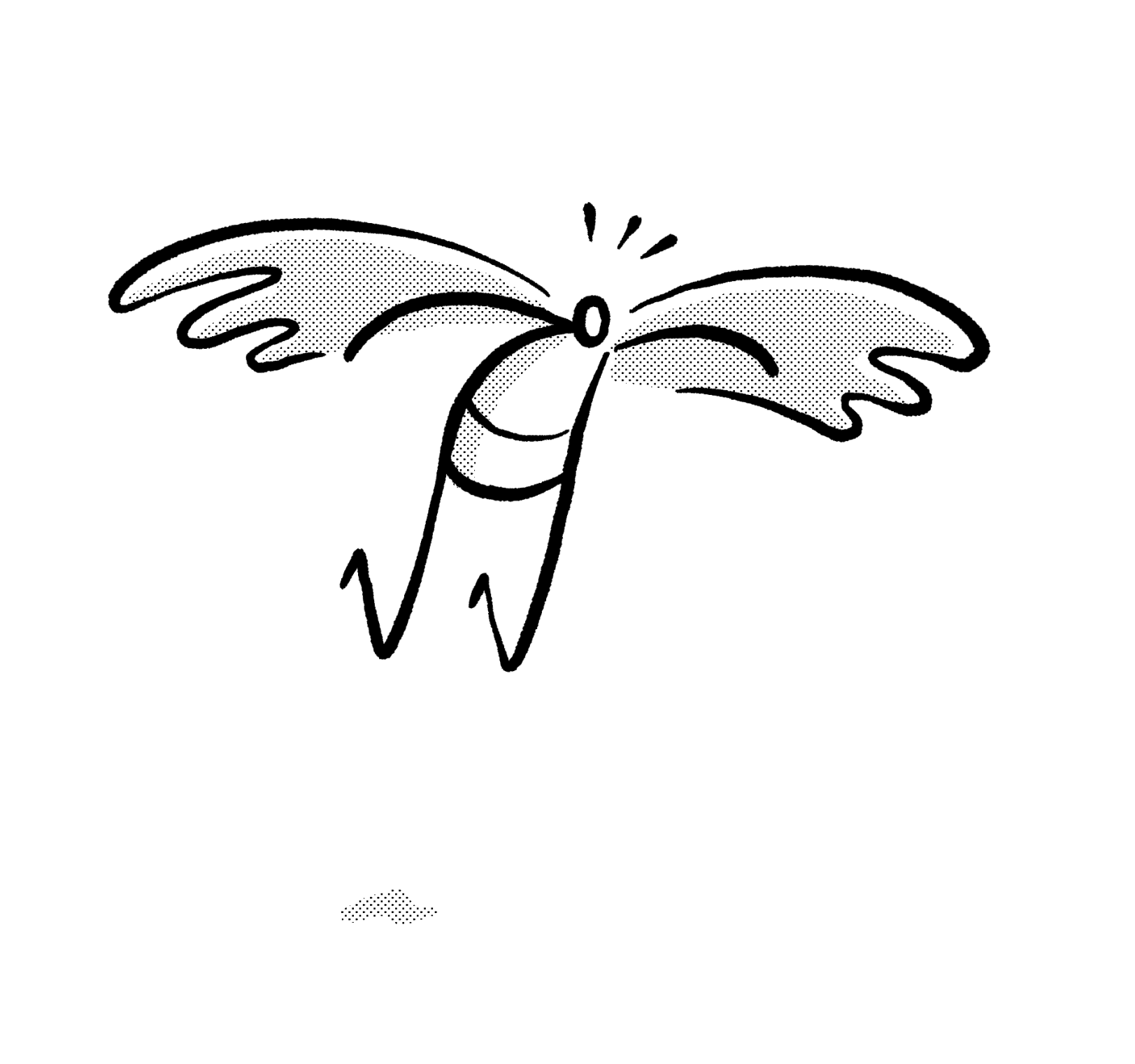
“I’m walking in the air”
Drones are now everywhere
Somehow this technology has passed into the mainstream consciousness in the last five(?) years where the Ukraine situation has publicly mutated from a bully’s ground troop invasion into a weirdly digital “no-mans’ land” maintained and guarded by pilots with virtual head-sets. Animals now use drone netting to make nests.
The last Winter Olympics felt like the first drone-branded experience, and I thought it added something valuable and vital. We have all enjoyed those SkyCam shots during the World Cup.
My own interest in capturing outdoor adventures led me to the DJI door. I spent some time a couple of years ago using a HoverAir device which miraculously tracked its running/cycling object with amazing efficiency. Since that time have found my self leaning towards the Neo2 - a piece of technology that seamlessly bridges traditional drone tech with ordinary consumer expectations.
In the end I bought a B-graded second-hand DJI Neo 2 from CEX for the relatively small sum of £380. It was the Motion combo with the goggles and single-handed controller. It’s interesting that although autonomous tracking was the original doorway, FPV has become the main thing for me to the exclusion of almost all the other functions.
Here are some observations based on my experience.
I have a dream
I have dreamt of flying my whole life. The experience of putting on goggles and then being taken out of my own body and flying above rooftops, gaping at spires, skimming along tree lines, zooming down water slides and swirling among murmurations… is a thrill that has knocked me off my perch.
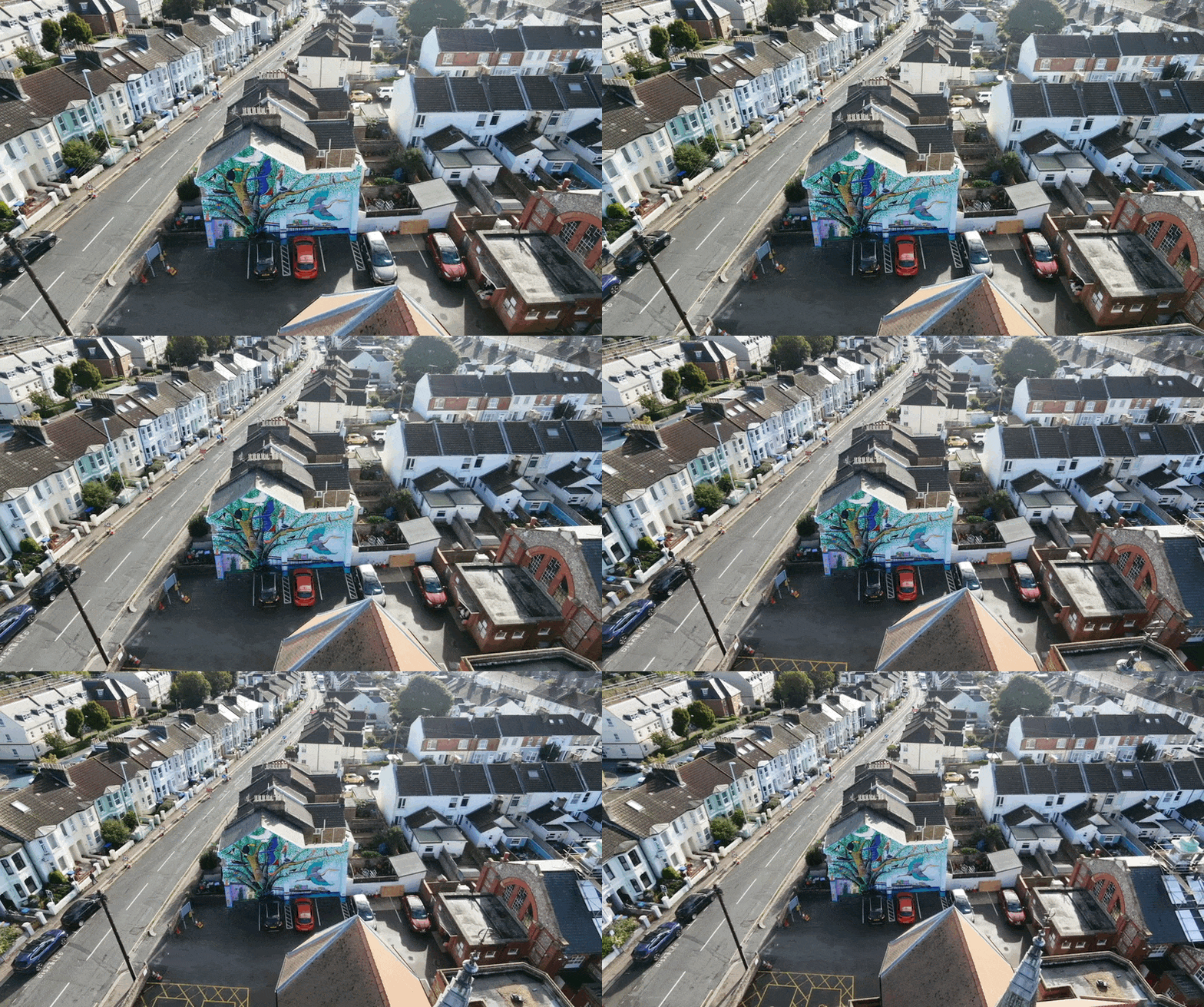
My friend made a bird mural which I captured… as a bird.
The first steps were nauseating.
Flying it round my house was almost too much - feeling dizzy I had to use a phone as a second screen because I found it so hard to adjust to the direct goggles sensation. I then bought (and returned) a more traditional controller to explore this option - but eventually I was drawn back into the intimacy and control of the FPV experience using DJI’s one-handed Motion Controller.
It’s interesting how at the start of all this I was primarily thinking of autonomous tracking options, but I got increasingly fed up with the ‘look-at-me” crowd on YouTube. Self-shooting clips have to be pared right down - no one cares to see your selfie beyond very brief contextualisation (I beg you: give us a sense of where you are and move on with the story!).
With the autonomous filming function also came the risk of losing the gear. However good the Neo2 is (and it is VERY good at this) I lost it a couple of times in mildly panic-inducing ways. I won’t go into the details but one of those instances did involve me cutting knee badly as I fell down a hill - I was trying to do too many things at once and almost paid the entire £380 price - which is a lot to lose.
In contrast, wearing those goggles and focussing on tiny detailed movements is a level of control that is hard to let go of. With tiny hand movements I found myself merging into the technology in Kafkaesque/Cronenbergian ways.¹
Now I am in this groove it just continues to delight and amaze. It changes the way I look at architecture. I am always thinking about what the top of a chimney looks like - or whether overhead wires might be a problem for this suburban Icarus. I am also more aware of the wind than I have ever been - and often sing my own version of that Mary Poppins’ song (exchanging the word ‘kite’ for ‘drone’ - go on, sing it).
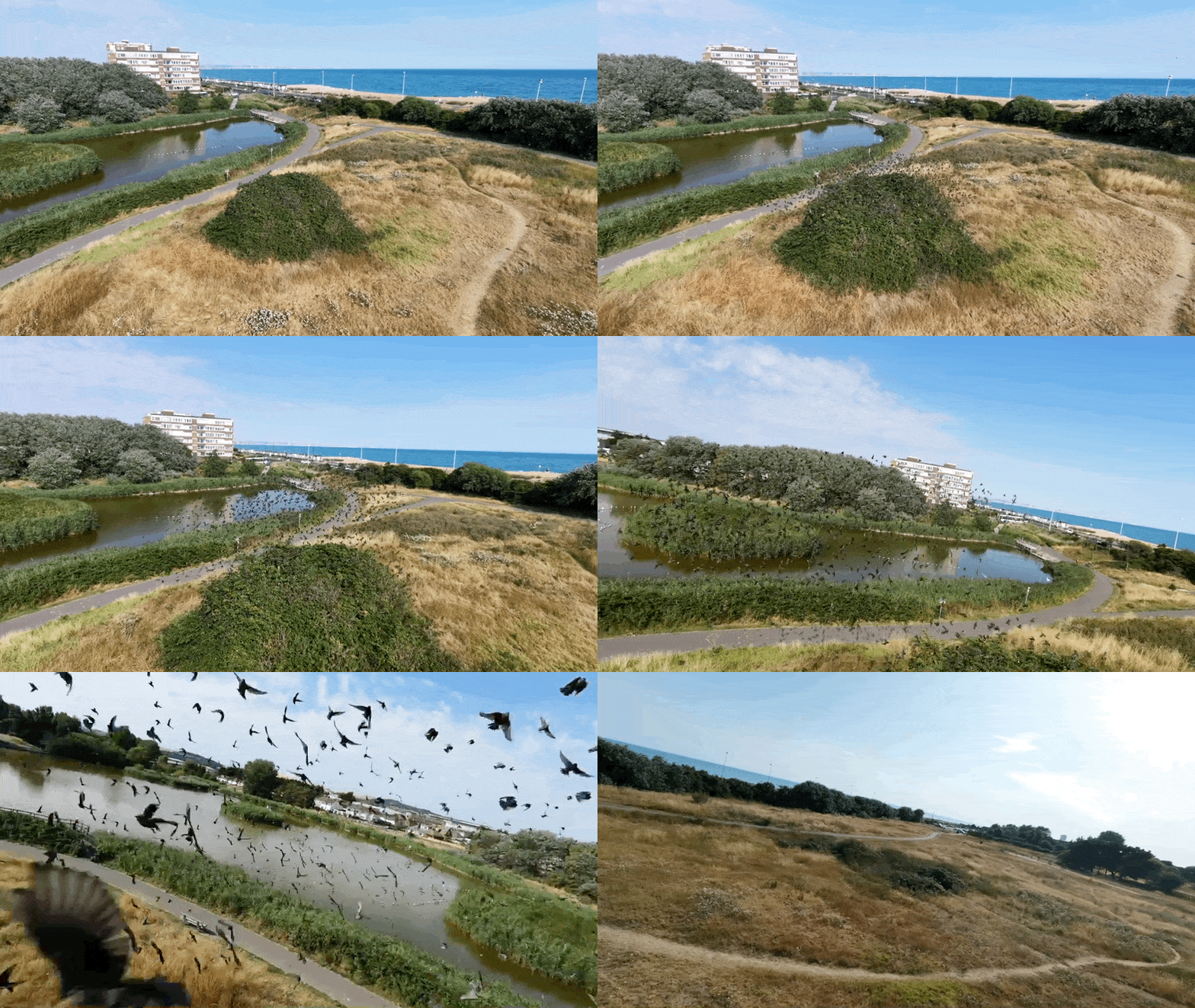
It took several journeys to capture this murmuration - but what a thrill.
A dream requiring restraint
In the UK there are healthy restrictions on flying a drone - which I happily embrace - but it’s an easy situation to abuse and I fear for a culture where people will ignore those bounds. Once you take off and five metre heights become the new normal, you become painfully aware that the old world is breaking. Very few people ever walk around on stilts or carry a ladder unless they are repairing a roof - and yet it’s just a matter of time before our culture adjusts to these new wandering giants (the simple fact that drones are so noisy is a privacy blessing).
Personally I shudder to think where this might end up. Witnessing the ugliness of speakerphone abuse on public transport tells me that drones are a dream requiring restraint.
Where this has led me is to think creatively how to use this tech-gift to help others - to take it away from the look-at-me syndrome - and to elevate/enhance how others might experience the world. Over the summer I worked on a youth camp and used it to capture fun activities. It definitely added to the experience as we all laughed together watching water slide adventures and laser tag missions.
I suppose this is yet another example of where inward-focussing activities never yield as much satisfaction as community-orientated ones (e.g. playing bass alone in my room never compares to playing in the church band where 100 people in that room are singing their hearts out).
Here are some further reflections (in no particular order):
Treat each flight like it’s your last
Although this particularly forgiving drone is so robust (I have crashed it a lot) there is always the possibility that you might lose it. This is something to embrace and live with. It certainly means that while I fly it a lot, I never fly it casually.
It’s not a drone, it’s a (very) flexible camera
All those famous extended Hollywood crane shots that I grew up adoring are suddenly within some kind of tangible grasp and it feels intoxicating to have that ability. I visited a famous location in Derbyshire recently - Lud’s Church - a natural rock fissure where persecuted Christians in the 16th Century worshipped in secret. I was there to shoot an explainer video for work, and was able to do some exciting aerial entry shots that previously only existed in my imagination.
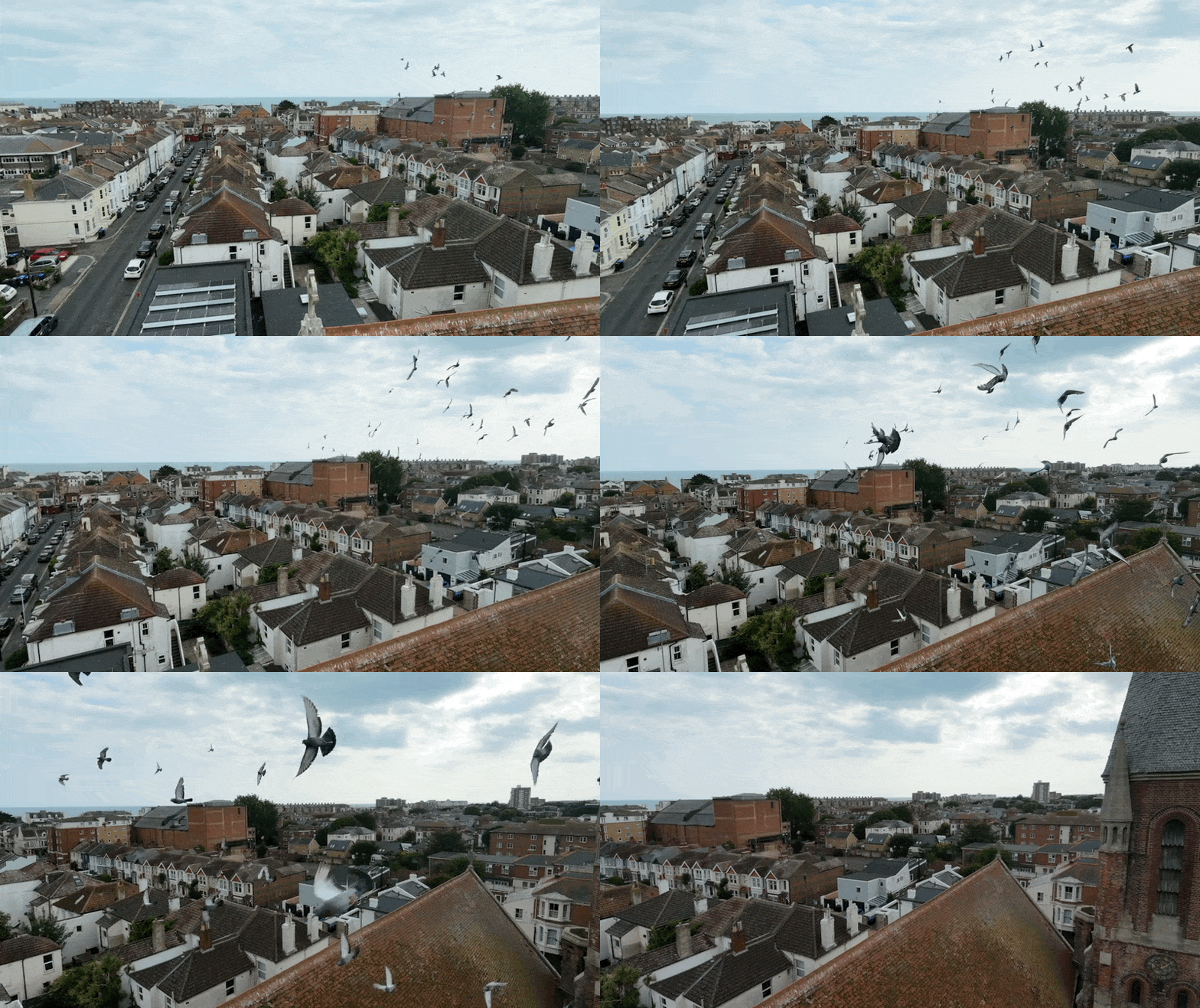
I had to trust that those pigeons had better collision avoidance than me
A safe scale
The size of the Neo2 means that anxieties about people losing body parts (thanks ER for that Romano-meets-helicopter episode) are no more. It is a tiny, enclosed and highly manoeuvrable gadget that easily moves through spaces opening up exciting cinematic opportunities.
Storytelling still sits enthroned
“Low-quality” footage serving a clear story disappears into a bigger vision.
This means that with skilled direction you can use any camera without worrying about the LUT or lens. Yes this doesn’t excuse the importance of understanding the unique contribution that each tool brings. A skilled craftsperson understands the nature of their toolkit - but it is too easy to obsess over upgrades when the biggest issue is taking time with a cheap biro² and thinking hard about what you are trying to communicate.
My head is spinning with possibilities and I am loving this era. How can this tool be used to invest in a narrative with deeper significance?³
Video requested the radio star
There is a truism among editors that sound carries more than 50% of the film experience. This has been borne out every time I’ve made something. With drones this carries special significance because (in general) footage arrives on the editing timeline as a silent artefact. It’s amusing that such extraordinary innovation has landed us into a curiously new silent era.
Always be charging
At first glance the Neo2 has such a tiny battery provision (each flight lasting less than ten minutes) that multiple backup batteries is the only sensible option. In the end I have four which I systematically cycle through. To date I have never needed them all in one session.
Instinctive tech - it is The Way
Something I have often talked about on this process blog is the importance of having technology that supports the creative instinct. The Apple Pencil (with properly set up keyboard shortcuts on Clip Studio Paint) is one such example - it complements the speed and instinct of the artist, allowing for ideas to develop as the work unfolds. The technology and the creative act aren’t separate moments - they facilitate each other simultaneously.
The DJI Motion controller has allowed me to do something similar. The tight feedback loop of flight/filming/thinking as I go feels seamless.
Can you tell that I am excited?
Note to my younger self
For years I have pushed shopping trolleys in supermarket aisles living out the secret fantasy of being the Millennium Falcon in that Asteroid field in The Empire Strikes Back. Responding to oncoming boulders in zero gravity (AKA old ladies next to the cheese counter). And so, here I am moving round the tree branches at my local park, or zipping through the abandoned car park in town. I AM Han Solo AND Chewbacca avoiding Tie-Fighters who have foolishly followed me into the dangerous debris field.
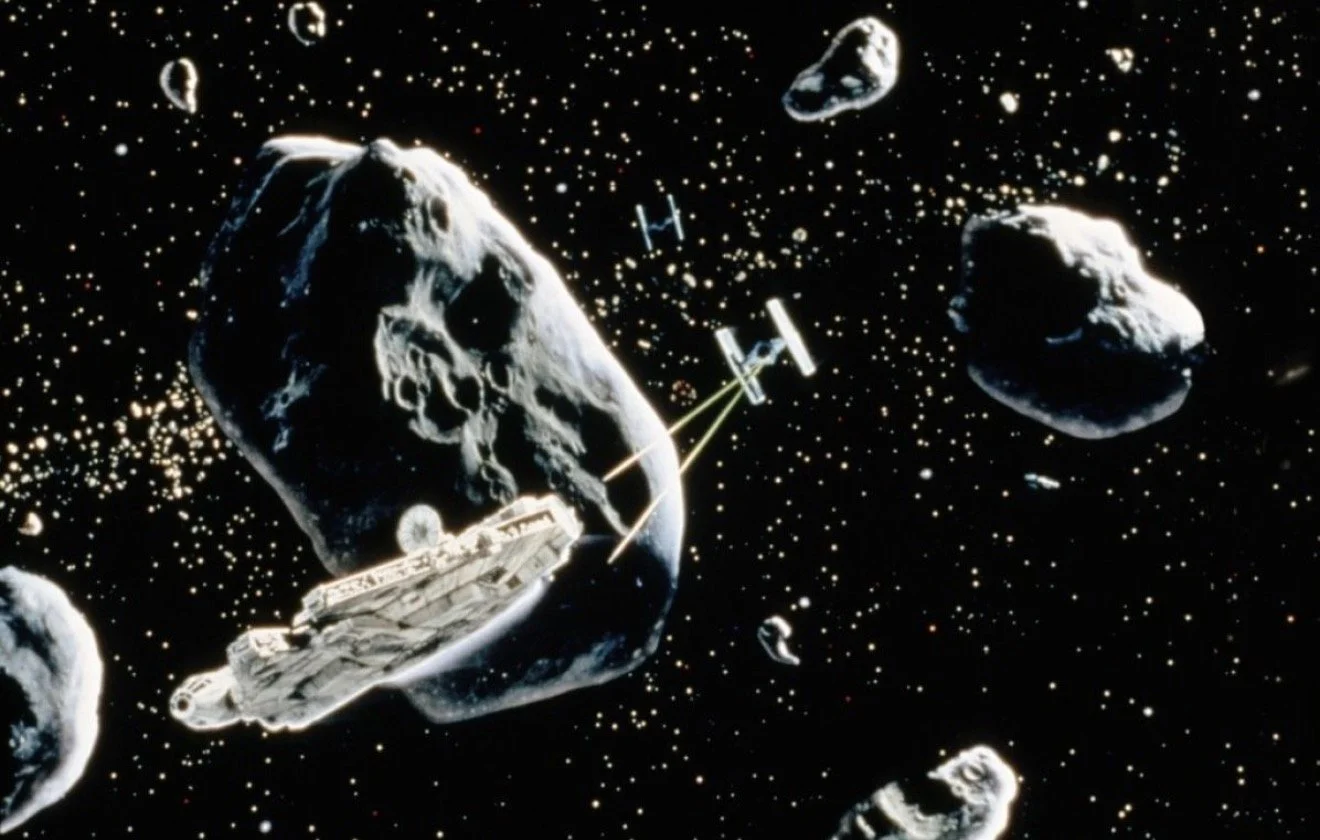
¹ Yes I am well aware of how disturbing that sounds. Trans-humanism - or the desire to expand the natural (and healthy) limits of humanity - has some disturbingly hollow Tech-Bro promises that have led into all sorts of icky directions. While it’s easy enough to sit at a distance and judge these changes harshly, I have seen things you humans wouldn’t believe… starships on fire off the shoulder of Orion. Long live the new flesh. Yes I know. But do I?
² Or however you do your thinking. I guarantee that the cheap low-tech option is probably the most valuable.
³ In actuality I have done a lot of thinking about this already. In addition to filming stuff I have also been using this to explore reference imagery for an animated film I want to make that uses bird colonies.
The story of Joseph - compressed into one image
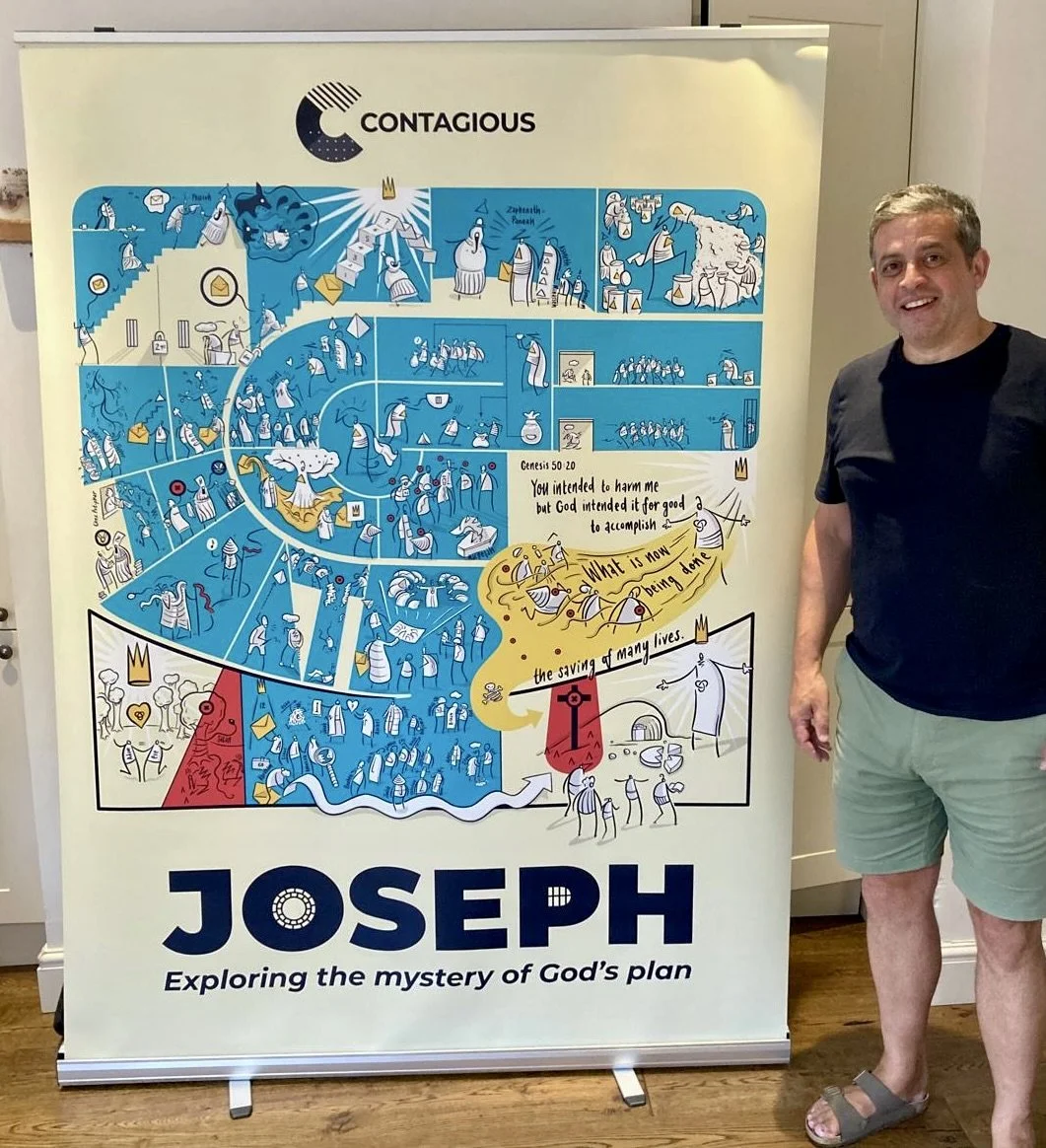
Previously I wrote about my efforts to reinterpret the story of Joseph into a visual form. Most recently I have taken that material and compressed it into an infographic that can be broken up into 30+ separate pieces. The idea is to use this with approximately 1000 teenagers to explain the story this summer. It will be printed large and broken up for booklets/slideshows.
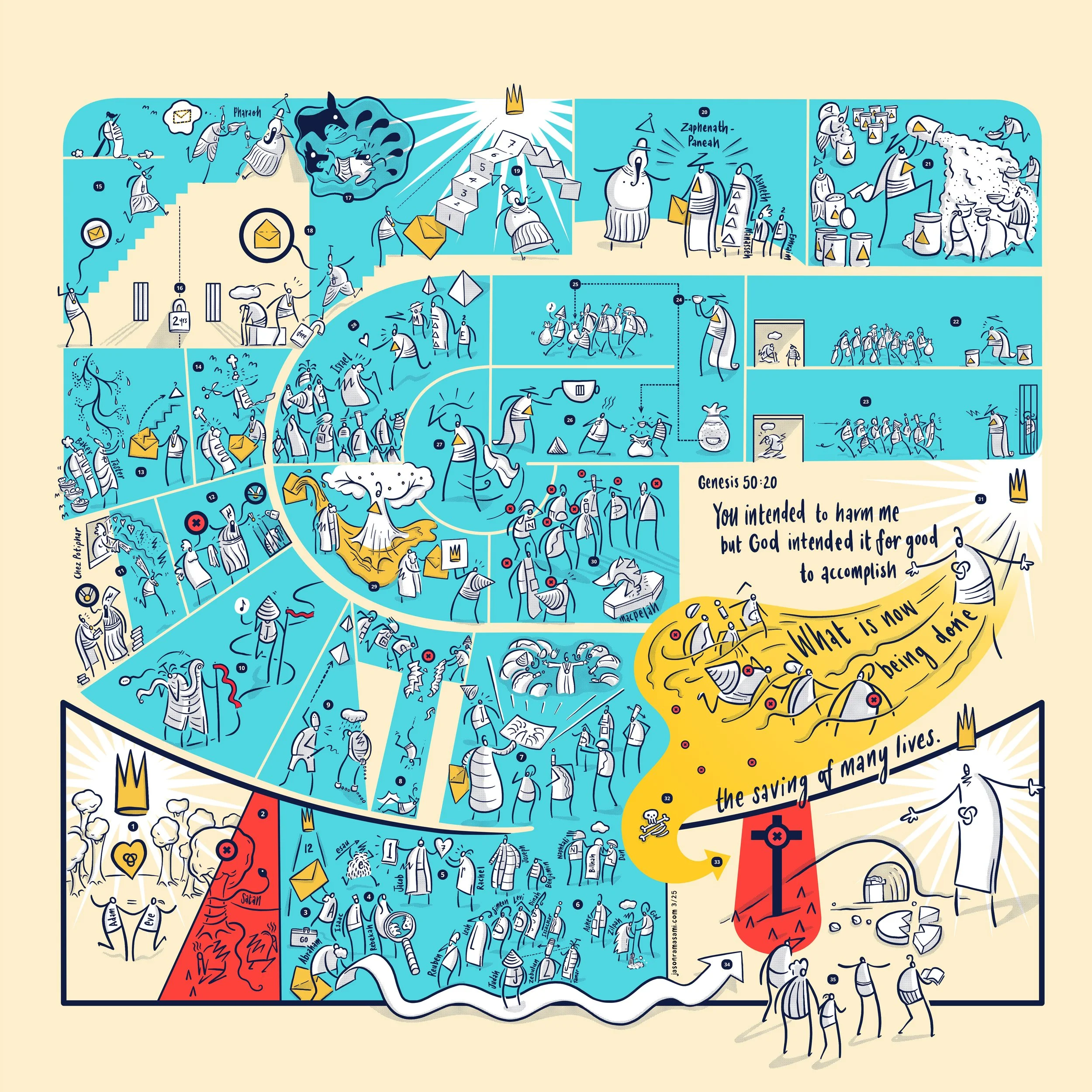
Here is a timelapse (if you are into that kind of thing) which will hopefully prove beyond doubt that it wasn’t created with AI.
RunNotes: increments with the format and process
I thought it was worth writing up some of my current process thinking. I have been able to complete three RunNotes films just recently and each time I have another go at these things I inevitably change the way I operate because it’s always so difficult to put them together.
Let’s start at the ending(s) shall we?
In late December I visited Nottingham for a work trip. I decided to run from Bramcote to the Ratcliffe-on-Soar power station. As it was due for decommissioning in September 2024, I felt even more compelled to go there. The route I planned (using the brilliant footpath application) took a twisty journey along the Trent river and Attenborough nature reserve.
Here’s the film I ended up with:
Then on Christmas Eve, no less, I decided to give Bognor Pier to Worthing Pier a go - picking my way along the coast line.
This is it:
And finally - in mid January - inspired by the idea of travelling from Pier to Pier I decided to go from Worthing to Brighton.
This was a lot shorter than the Bognor route (and more boring). So I wondered whether I might try something more adventurous. I came up with a Devil’s Dyke detour taking in some of the Three Forts route before concluding with a downhill approach into Brighton.
This was a terrific experience with plenty of memorable moments - not least the cows and gliders. Here is the final piece:
Process changes - in brief
Please excuse me if this is brief.
1: Filming: GoPro and iPhone
The principle is here about capturing things without any friction or interruption. I carry a GoPro in my running short pockets - no longer using any handles or added gizmos (just a spare battery in my backpack). If I see something I will film it quickly and easily without needing to stop. For more complex shots I might pause and get my iPhone out - for the clips above I used the superior lenses for key moments. Having both on me makes a difference.
2: Animating: Apple Motion and Affinity Designer
After that previous blog post about maps I now do the following:
plan the original route in footpath, exporting to WorkOutdoors for a guide during the actual run
bring the completed run GPX data from WorkOutdoors back to Footpath to use for reference
produced my own large-scale blank canvas using the screenshotted images like so:

This is a screenshot in Motion. I actually used a grid to export tiles from Affinity Designer to make is easier when compositing as the pixel count is quite large…
NOTE: the 1080p window is the small highlighted area in the bottom right corner
I use PixelMator Pro to send SVG files into Motion (such a useful workaround)
from here it was a mainly a matter of using the WriteOn function and animating the camera
the route uses a duplicate vector underneath to achieve the thick black edge
I export two versions - one in standard H264 and one with the 4444 codec to allow for occasionally superimposing the route above footage
The main change is to keep things moving in the edit. No one really cares about stopping and starting so I constructed a continuous moving line rather than having it slow down and pause at different destinations. It makes for a much quicker feel in the edit.
3: Editing: humanity behind those buttons
I am regularly amazed at how strenuous it becomes making these little films. I have tried to streamline the process (and to a certain extent I’ve made some progress) but it’s still true that editing is never simply a matter of pressing some AI button and trusting the result! There is human artistry in feeling the flow of imagery which cannot be handed over to a soulless workflow.
Where the process has improved for me - is having a sense of how to prepare the different assets so I can flexibly arrange them in the timeline. I love the idea of being aware of this now when I am running so I know what will translate well as I’m filming it. In the end, editing insights eventually influence the earlier production stages.
arrange the material into usable compressed chunks on one timeline (this has tended to be up to about 12 minutes in length)
create a much tighter highlights edit (30 secs up to a minute)
final combo timeline combining everything (aiming for around 3-6 minutes ideally)
Other thoughts
These three films combine some incremental changes that I think make for a more entertaining watch:
an overview map title at the start and end
a super-fast highlights intro reel to whet the appetite without (I hope) killing curiosity
a shorter running time of 4-6 minutes long (which seems really different compared to the Isle of Wight piece)
Finally - the big idea with these is to avoid the endemic YouTuber Army narcissism by focussing on the route experience rather than the runner. No one really needs to see more of me but we could all do with getting out more and exploring those sights, smells and general feels.
What’s next?
Now I have a good sense of what these pieces look like I have two projects on the horizon:
next week I am heading to the so-called Jurassic Coast
at the start of May I am reuniting with my old mate Gary Luigi to run from Eastbourne Pier to Brighton… a mere 27 miles…
Thanks for reading - hopefully some of this is useful - get in touch to let me know if you were helped in anyway.
The Durrington Journey

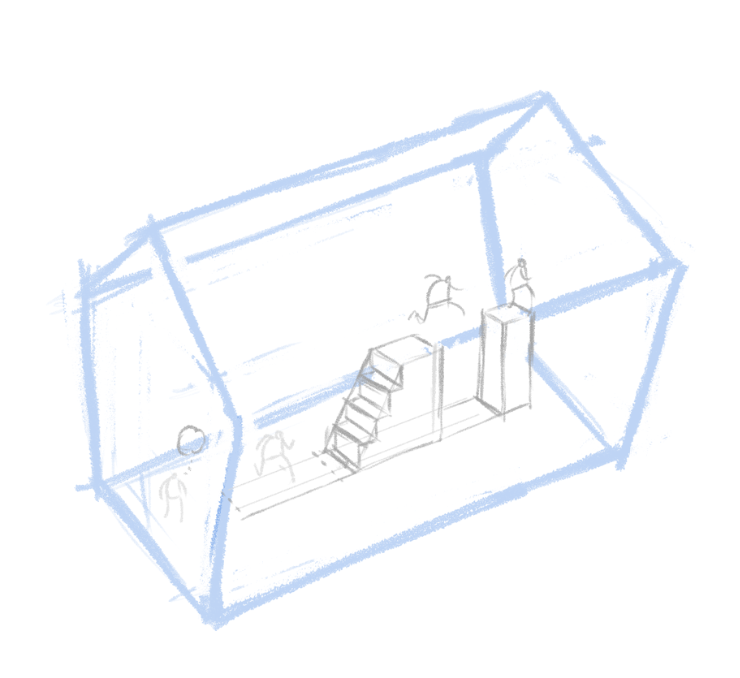
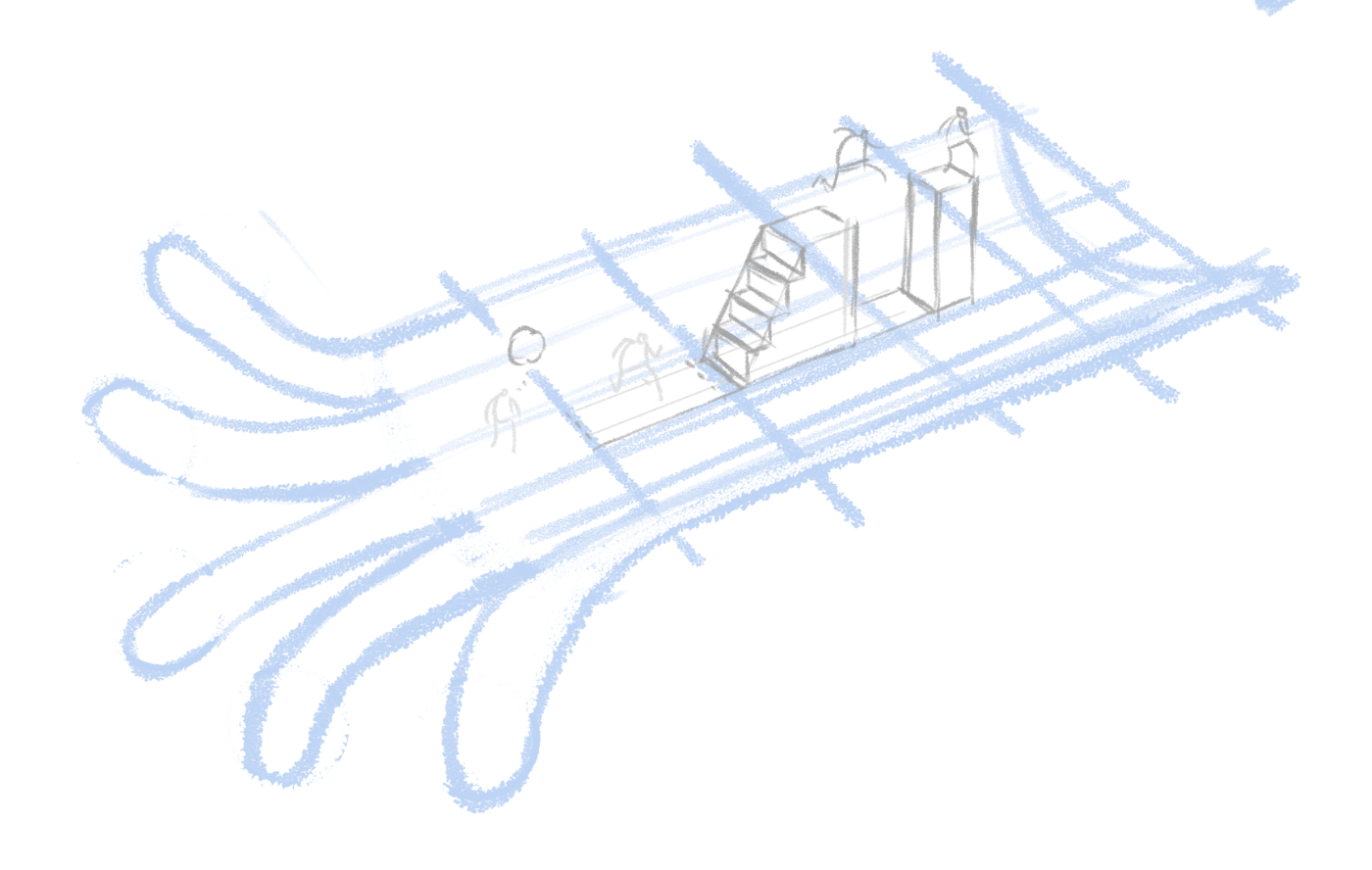
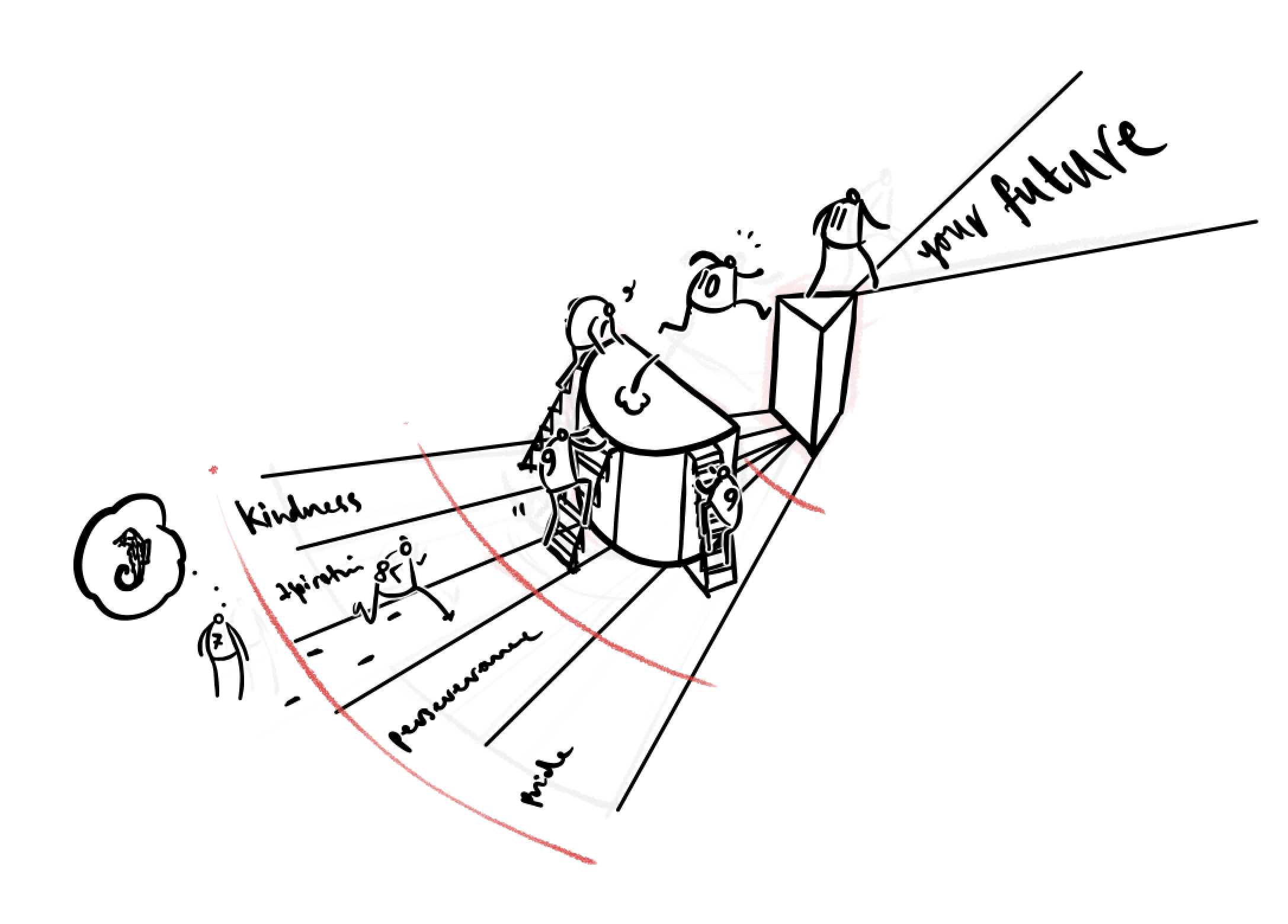
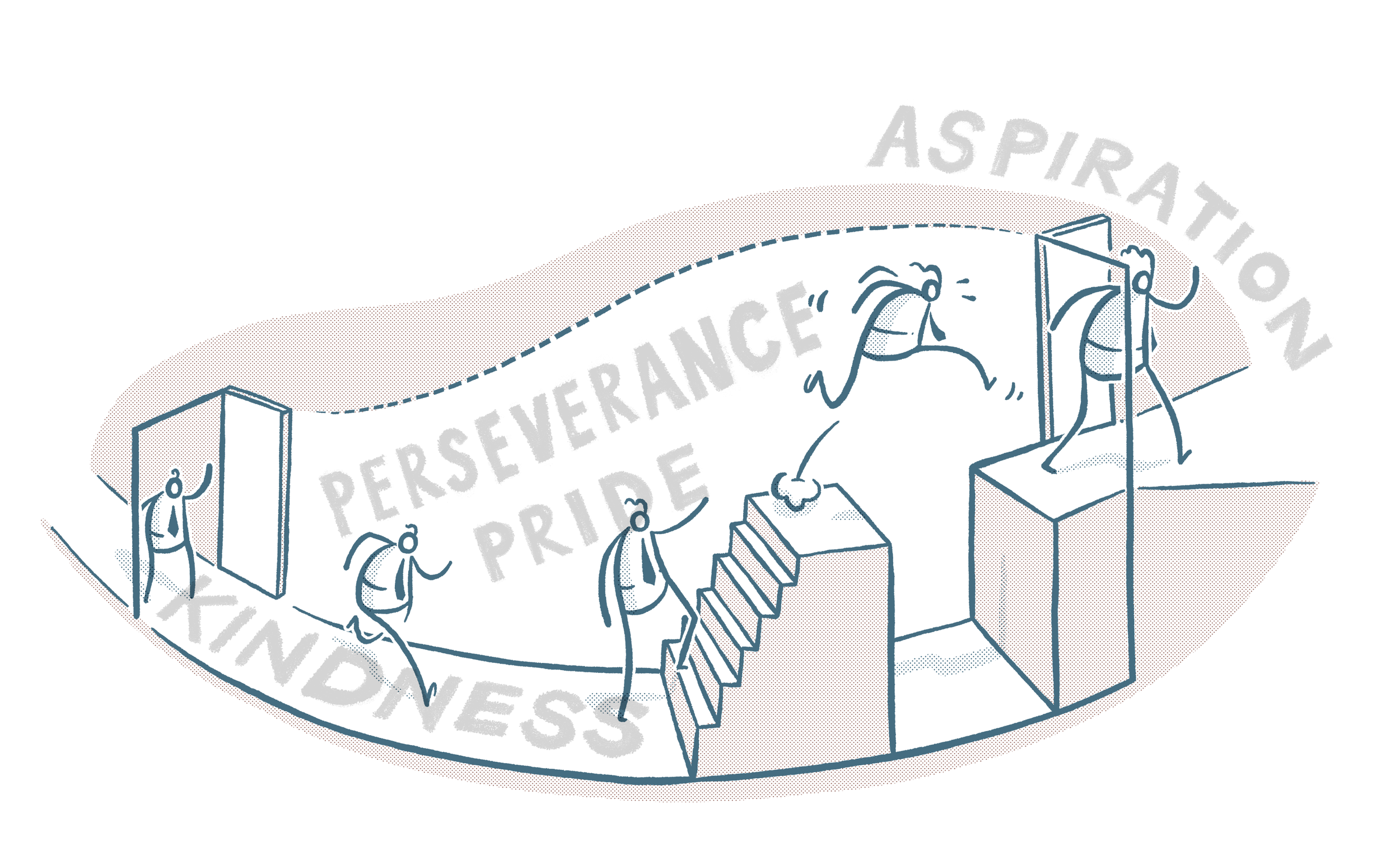
I think it’s fair to say that I have a lot history with Durrington High School. It was a pleasure to be asked by Shaun Allison and James Frost to create an image that would summarise the key ideas behind the whole journey of the students.
The project arose because there were lots of (great) messages bouncing around which were ultimately confusing for new and existing students - the leadership team were looking for something that would be easy enough to understand and that could be used to reinforce a deeper grasp of an integrated educational path from year 7 to beyond year 11.
After a few sessions and a number of changes, this was the end result.